
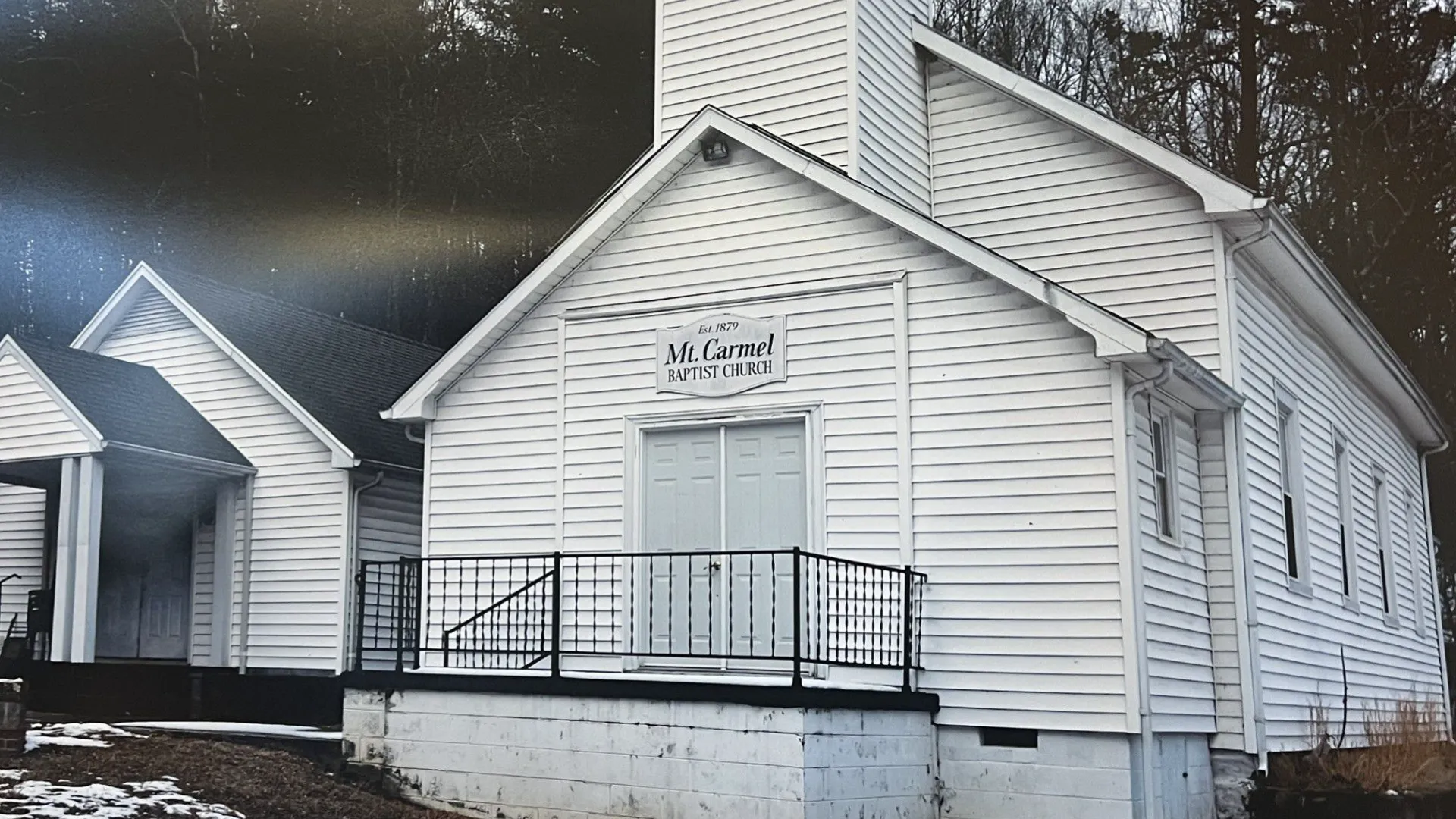
At a recent Albemarle Charlottesville Historical Society preservation lecture, architect Jody Lahendro, FAIA, delivered a talk that was about much more than old buildings. His message: rural Black churches and schools in Virginia are not just relics, they are the backbone of post-emancipation Black communities, and their preservation is essential because they “represent the truth” of local history. Lahendro’s lecture, grounded in decades of hands-on preservation work, challenged the audience to see these humble structures as vital records of community formation, education, worship, and self-determination.
In the heart of Charlottesville, VA, Commonwealth Contractors are established experts in historic preservation and adaptive reuse for new home builds and luxury renovations. If you have any questions after reading this guide, please reach out.
How Jody Lahendro Became a Champion for Black Historic Sites
From Rosenwald Schools to Rural Churches
Jody Lahendro’s journey into this work began unexpectedly. After retiring from a long career in preservation architecture, including 16 years at UVA, he was invited by the Building Goodness Foundation to help save the Saint John Rosenwald School. At the time, he knew little about African American historic architecture. But researching the school’s history opened his eyes to the broader story of Black churches and schools in Central Virginia, and to the alarming rate at which these buildings were disappearing.
Initially, Lahendro focused on schools, especially Rosenwald and non-Rosenwald sites. Over the past year and a half, he has shifted to working with historic Black churches. Through this work, he has come to see both as “core institutions” of African American communities founded during Reconstruction.
Black Communities Formed Around Land, Churches, and Schools
Community Geography and Institutional Backbone
Lahendro’s central historical claim is that after emancipation, Black communities in rural Virginia clustered together for security, land ownership, and mutual support. These settlements often formed near former plantations, where land was available and employment continued. Within these communities, churches and schools quickly became the most important institutions, serving as anchors for social, spiritual, and educational life.
For example, the Saint John area and Union Ridge illustrate how Black land ownership, church founding, and school construction were intertwined. In Union Ridge, six Black men purchased a 50-acre tract in 1868, which soon supported a thriving community, a Baptist church, and a graded school that later became the Albemarle County Training School for African Americans.
A map of Albemarle County from Lahendro’s research shows a close relationship between Black-owned property, churches, and schools, evidence that these buildings were never isolated, but part of a broader social landscape.
Why Churches Came First, and What They Provided
More Than Worship: Social and Educational Hubs
Churches were often the first institution Black communities established after emancipation. Lahendro emphasized that these were not just places of worship, they provided social organization, cohesion, personal and racial uplift, and even education. Many early schools met in churches or reused buildings before dedicated schoolhouses could be built.
By 1870, an estimated 80% of Black Virginians were church members, with 85% of those belonging to Baptist congregations. Many congregations first worshiped in brush arbors before they could afford permanent buildings. As Lahendro put it, “freedom and schoolbooks go together,” highlighting the deep connection between spiritual and educational aspirations.
What Rural Black Churches Looked Like, Before Later Additions
Reading the Buildings: Simplicity and Function
One of the most fascinating parts of Lahendro’s lecture was his architectural detective work. He explained that many rural Black churches were originally much simpler than they appear today. By stripping away later additions, enlarged chancels, vestibules, choir areas, offices, toilets, paneling, and dropped ceilings, he found a recurring original form: a simple rectangular, gable-roofed structure focused on hearing and seeing the pastor.
Interiors typically featured painted tongue-and-groove beadboard, with minimal ornamentation around windows and doors. Later features, such as bell towers and choir spaces, reflected congregational growth and changing worship patterns. Some churches used hung chimneys and cast iron stoves for heat, and floor plans were often symmetrical, centered on a raised pulpit platform.
Sidebar: Common Features of Rural Black Churches in Lahendro’s Research
- Rectangular form, gable roof
- Beadboard interior finishes
- Raised pulpit platform at one end
- Minimal ornamentation, mostly at windows and doors
- Later additions: vestibules, bell towers, enlarged chancels, choir areas
Case Studies: What the Buildings Revealed
Mountain View Baptist Church
This abandoned church in Batesville is now the focus of a local preservation effort tied to cemetery care. Lahendro’s investigation revealed that beneath mid-20th-century alterations, like a dropped ceiling and paneled walls, was a much simpler original sanctuary, with beadboard finishes and a raised platform for the preacher.
Mount Carmel Baptist Church
Located in Browns Cove, Mount Carmel retains a rich historic interior, including a chevron-patterned beadboard wall and a hung chimney. Lahendro traced the building’s evolution through records and physical evidence, showing how phased additions, fellowship hall, toilets, bell tower, reshaped the original rectangular space.
Spring Hill, Sand Road, and Mount Olivet Baptist Churches
These churches further illustrate the pattern: original simple forms layered over time with vestibules, choir areas, offices, and other additions as congregations grew and worship practices changed.
The Preservation Challenge Facing Rural Black Churches Today
Declining Attendance and New Realities
Lahendro noted that church participation rates have dropped dramatically from earlier eras. While 80% of Black Virginians attended church in 1870, today ministers estimate only 20–25% do. This decline makes preservation and maintenance more difficult, as smaller congregations struggle to care for aging buildings.
To address these challenges, the Coalition of Black Churches of Albemarle County was formed, bringing together ten churches to share information and resources. Lahendro and a graduate student are assisting with building conditions, history, and documentation.
From Churches to Schools: Black Education After Emancipation
Freedmen’s Bureau and Early Black Schools
The educational story parallels the church story. The Freedmen’s Bureau began supporting Black education in Charlottesville in 1865, with Anna Gardner, a Quaker from Nantucket, teaching at the Delavan Hotel. By 1870, there were four Freedmen’s schools in the city and three in the county. Despite a state constitution mandating public education for all races, the system was underfunded and controlled by white officials, who funneled resources to white schools.
Black communities provided teachers, buildings, and made sacrifices to educate their children, often meeting in churches or makeshift structures. The quality of education was meager, but the commitment was unwavering.
The Shift to Purpose-Built Black Schools
Progressive Era Reform and Philanthropy
By the early 20th century, better school buildings began to appear, thanks to Progressive Era reforms and targeted philanthropy. Northern industrialists created funds to improve Southern education, with the Rosenwald Fund, established by Booker T. Washington and Julius Rosenwald, becoming especially influential.
The Rosenwald program built over 5,000 schools in the South, including more than 380 in Virginia. Albemarle County had seven Rosenwald schools, five of which still stand. The program required matching funds from Rosenwald, public authorities, and local Black communities, who were, as Lahendro pointed out, effectively taxed twice for their schools.
Sidebar: What is a Rosenwald School?
- Collaboration between Booker T. Washington and Julius Rosenwald
- Over 5,000 schools built for rural Black communities in the South
- Prototype plans emphasized classroom orientation and natural light
- Matching funds required from philanthropists, public authorities, and local Black residents
Saint John Rosenwald School: A Preservation Success Story
From Threatened Landmark to Community Resource
The Saint John Rosenwald School, a two-teacher, east-west oriented building, was sold after school consolidation in 1954 and converted to a residence. Damaged by fire in 2002, it was purchased by a nearby church for expansion. Alumni became the driving force for preservation, and today the building has reopened as the Saint John’s Family Life and Fitness Center, a living example of community advocacy turning threatened history into a resource for the future.
Other School Examples: The Range of Preservation Work
Pine Grove Rosenwald School (Cumberland County)
An early Rosenwald school with a slate roof, likely due to local labor and materials, Pine Grove has been stabilized by an active community group, with exterior repairs and roof replacement completed.
Salem Rosenwald School (Charlotte County)
A current project, Salem is a three-teacher Rosenwald school with strong documentation at Fisk University. Preservation efforts are underway.
Evergreen School (Fluvanna County)
Evergreen is an example of a school built from state Department of Education prototype plans rather than Rosenwald designs. It is now being considered for National Register eligibility.
Rocky Branch School: How Preservation Actually Happens
Step-by-Step Preservation in Action
Lahendro used Rocky Branch School in Dinwiddie County as a case study in preservation practice. Deed research and school board minutes revealed the site’s history and its relationship to the nearby Baptist church. The building began as a one-room school, later expanded by moving a classroom from a white school two miles away, a process that, as records show, required Black patrons to pay for the move.
Preservation work included measured drawings, condition surveys, oral histories with alumni, cost estimation, grant writing, construction documents, bidding, and construction oversight. Repairs included replacing piers, reinforcing joists and girders, repairing sash windows, and reroofing. The project was funded by an African American Civil Rights grant, which also required National Register eligibility and listing.
Sidebar: What a Preservation Architect Actually Does
- Researches deeds, minutes, and physical evidence
- Documents buildings with measured drawings and condition surveys
- Conducts oral histories to capture community memory
- Prepares cost estimates and grant applications
- Oversees construction and ensures compliance with preservation standards
Funding, Grants, and the New Reality of Preservation Work
Changing Landscape for Preservation Funding
Lahendro explained that preserving these buildings is as much a funding challenge as a historical or architectural one. The African American Civil Rights grant from the National Park Service was especially useful, but is no longer available. Virginia’s Black, Indigenous, and People of Color (BIPOC) grant program is now a key source, but competition is fierce and many grants only partially fund projects.
Looking ahead, Lahendro suggests that future preservation may rely more on small grants, local help, volunteers, and service organizations like Building Goodness Foundation. Professionals will still need to lead the work, but the model may become more incremental and community-driven.
Why These Buildings Matter, Even If They Are Not Monuments
Preserving the Truth of Black Community Life
Lahendro closed his lecture by reminding the audience that these churches and schools are not architectural masterpieces, nor are they tied to headline-making historic events. But that is exactly why they matter. They document the lived structure of Black life in rural Virginia, revealing the institutions Black communities built for themselves, the inequities they faced, and the evidence still present in the landscape today.
Preserving these buildings expands our understanding of what counts as history worth saving. They are not grand monuments, but they are essential because they “represent the truth.”
Partner with Commonwealth Contractors for Your Preservation Project
If you are inspired by the preservation of rural Black churches and schools and are considering a historic restoration, adaptive reuse, or luxury renovation in Virginia, Commonwealth Contractors is your trusted partner. Our team brings deep expertise in both modern construction and historic preservation, ensuring that every project honors the past while meeting the needs of the present.
Whether you are restoring a historic home, adapting a community landmark, or building a new residence with respect for local heritage, we invite you to contact Commonwealth Contractors today to discuss your project and discover how we can help bring your vision to life.

.webp)
.webp)
.webp)


.webp)
.webp)

.webp)
%2520(1).webp)
%2520(2).webp)


.webp)
.webp)
.webp)
%2520(1).webp)
%2520(3)%2520(1).webp)
%2520(1)%2520(1).webp)
.webp)
%2520(1).webp)
%2520(2)%2520(1).webp)